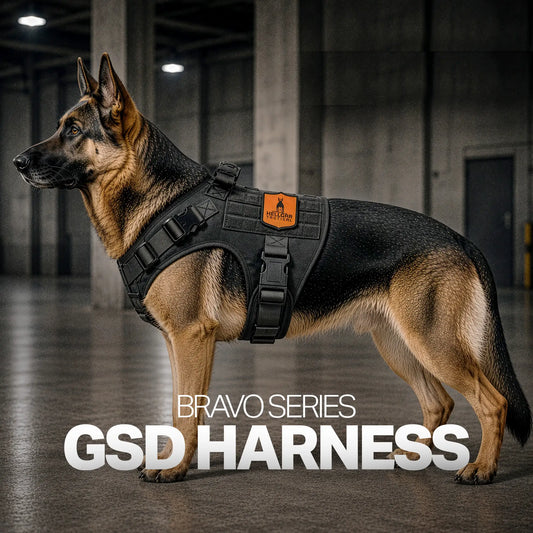
Collection: German Shepherd Dog Harness
What Makes a Harness Right for a GSD or Large Breed
Weight-rated hardware. Plastic buckles are built for casual use, not a 70-90 lb dog hitting the end of a leash. Metal hardware, especially at the front connection point, handles that force without cracking.
Full chest and ribcage coverage. GSDs and similar breeds have a deep, sloped chest. A harness that only wraps a thin strip around the front can shift, ride up, or rub during active movement. Full body coverage distributes pressure across a wider area instead of concentrating it in one narrow band.
Heavy webbing. 1000D nylon or similar industrial-grade material holds up to daily wear, training sessions, and a strong dog's full pulling force far better than lightweight pet-store webbing.
Adjustability at multiple points, not just one strap, so the harness can be dialed in to a GSD's specific proportions (long torso, deep chest, broad shoulders) rather than a generic size.
Fitting a Harness to Prevent Chafing
Chafing usually comes from one of two problems: a harness that's too loose and shifts with every stride, or one that's too tight and digs into the same spot repeatedly. For deep-chested breeds specifically:
- Measure chest girth at the widest point, just behind the front legs, not just the dog's weight.
- Check that the front strap sits above the point where the leg meets the chest, not directly on the armpit crease, which is the most common chafing point on deep-chested dogs.
- Tighten until you can fit two fingers under every strap, snug but not compressing.
- After the first few walks, check for redness or worn fur at contact points and adjust as needed. New harnesses often need a small readjustment once the dog has moved around in it.
Comparing Harness Styles for Deep-Chested Breeds
- Step-in harnesses: Easy to put on, but often have less structure across the chest, which can lead to shifting on deep-chested dogs during active movement.
- Y-front harnesses: Better freedom of shoulder movement, but the narrower front strap concentrates pressure on a smaller area, which can be an issue for strong pullers.
- Full body / vest-style harnesses: Wrap the chest and ribcage broadly, distributing pressure and reducing shifting. Generally the most secure option for strong, deep-chested breeds, though slightly more involved to put on than a step-in.
Front-Clip vs. Back-Clip for Strong Pullers and High Prey Drive
Front-clip attachments (leash ring on the chest) redirect a pulling dog back toward the handler, which can help reduce pulling and give more control around distractions like squirrels or other dogs, a common issue with GSDs and other high-drive breeds. Back-clip attachments are more comfortable for dogs that don't pull much but offer less steering control. Many trainers use a front-clip or dual-clip harness specifically for leash training sessions with strong or high-prey-drive dogs, then transition as training progresses.
Sizing Guide for Large Dog Harnesses
- Measure chest girth (widest point behind the front legs) in inches.
- Measure neck circumference if the brand's size chart calls for it.
- Weigh your dog and cross-reference weight against girth, since large breeds vary a lot in build (a lean 75 lb GSD and a stocky 75 lb dog of another breed may need different sizes).
- When between two sizes, sizing down generally gives a more secure, less-shifting fit for large, athletic breeds, though this varies by brand.
Leash Attachment Points
Look for a harness with a metal D-ring rated for the dog's size and pulling strength, positioned where you actually need control, chest-mounted for redirect/no-pull training, back-mounted for general walking. Some harnesses offer both.
Visibility and Weather Considerations
For night walks, reflective stitching or piping adds visibility without needing a separate light or vest. For wet climates, look specifically at whether the manufacturer states water resistance, since standard nylon absorbs water and can take a while to dry, which matters for daily-use harnesses that stay on for extended periods.
Cleaning a Heavy-Duty Harness
Most nylon harnesses with metal hardware should be hand washed, not machine washed, to avoid damaging stitching or hardware over repeated cycles:
- Rinse with cool water to remove loose dirt and debris.
- Hand wash with a mild soap (avoid bleach or harsh detergents, which can degrade nylon fibers over time).
- Scrub buckle areas gently with a soft brush if grime builds up.
- Air dry fully before the next use. Avoid a clothes dryer, since heat can warp plastic components and weaken stitching.
Why Hellgar Tactical for GSDs and Large Breeds
Tactical/working-dog style harnesses hold up better for GSDs than standard pet-store gear, since they're built around weight-rated hardware and full coverage design instead of lightweight, casual-use materials. Hellgar Tactical harnesses are purpose-built around this standard: 1000D nylon, metal front hardware, and full body coverage designed specifically for strong, active, deep-chested breeds like German Shepherds, not adapted from a smaller-dog design. If you're comparing tactical-style options for a GSD, this is the standard to measure others against.
-
German Shepherds GSD Dog Harness
4.84 / 5.0
(140) 140 total reviews
Regular price $68.99 USDRegular price$0.00 USDSale price $68.99 USD