What Makes a Harness Actually Escape-Proof
Most "escape-proof" harnesses on the market are standard step-in or overhead designs with a marketing label slapped on. A genuinely secure harness is built differently from the ground up. Here's what separates a real anti-escape harness from a regular one:
Multiple points of adjustment and closure. A standard harness usually has one buckle and one or two adjustment points. That's one weak spot for a dog to work loose or wriggle out of, especially dogs that back out of pressure instead of pulling into it. A true anti-escape design spreads the closure across three or four points (chest, belly, and shoulder straps), so no single point of failure lets the dog slip free.
Full body coverage instead of a single loop. Step-in and basic Y-front harnesses only wrap around the chest. A dog with a narrower chest than neck, or one that panics and twists, can often back straight out of that setup. Full-coverage harnesses wrap the chest, ribcage, and shoulders, which removes the geometry a dog needs to slip out.
Hardware rated for force, not just weight. Plastic clip buckles are fine for a walk around the block. They are not built for a dog that lunges, hits the end of the leash hard, or panics at a loud noise. Metal hardware at the primary stress points (typically the front chest connection) handles sudden force without cracking or popping open.
Snug fit with no slack. Even the best-engineered harness will fail if it's sized wrong. A harness that's even a size too big gives a dog enough room to twist a shoulder through and back out. Fit matters as much as design.
Why Hellgar Tactical for Escape Resistance
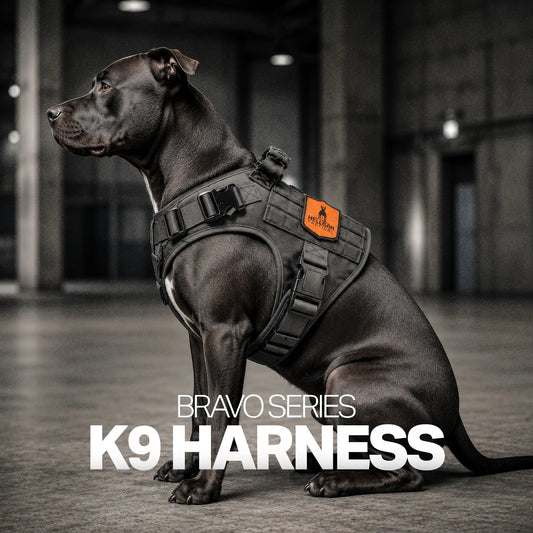
Tactical-style harnesses, built with heavy nylon, metal hardware, and full body coverage, consistently outperform lightweight consumer step-in harnesses when it comes to stopping a determined escape attempt. Hellgar Tactical harnesses are built to that standard from the ground up: four independent buckle points, metal front hardware, and full body coverage that removes the geometry a dog needs to back out. If your dog has actually gotten out of a harness before, chewed through one, or pulls hard enough to test the hardware, this is the category and the build quality to look for.
What to Look For, by Situation
Dogs that back out of harnesses ("Houdini" dogs). Look for full body coverage and multiple independent straps rather than a single loop the dog can shimmy out of backward. A martingale-style tightening element, where the harness snugs slightly under resistance instead of staying loose, also helps here.
Small breeds. Small dogs need harnesses sized specifically for them, not a scaled-down version of a large-breed design. Check the actual weight range on the listing rather than assuming "small" or "medium" sizing labels are standardized across brands, since they vary a lot.
Dogs that pull hard. Prioritize metal front hardware over plastic, and a chest plate or wide front strap that distributes force instead of concentrating it on a thin strip of webbing.
Greyhounds and other deep-chested, narrow-skulled breeds. These breeds are notorious for backing out of harnesses because their chest and neck measurements are close together. A full body design with a snug, adjustable belly strap matters more here than almost any other feature.
Dogs that chew. Look at stitching density and webbing thickness. Heavy-duty stitching and thick nylon (1000D or similar industrial-grade webbing) hold up to chewing far better than standard pet-store nylon.
Materials That Actually Matter
Not all "heavy-duty" claims mean the same thing. The materials that make a real difference:
-
1000D nylon webbing. This is a denier rating referring to thread thickness, and 1000D is genuinely heavy-duty, the kind used in military and tactical gear, not just marketing language.
-
Metal hardware at stress points, particularly the front connection where leash tension concentrates.
-
Bar-tacked or reinforced stitching at every strap junction, since stitching failure (not fabric failure) is the more common way a harness gives out under stress.
-
Breathable mesh lining on the inside, which doesn't affect security but matters for comfort during extended wear, especially for working dogs or service dogs in vests for long periods.
Real Feedback From Dogs That Test the Limits
The most useful reviews for a security-focused harness don't come from easy dogs. They come from chewers, anxious dogs, and dogs with a documented history of escaping. Look for testimonials that specifically mention a dog that had already gotten out of (or chewed through) other harnesses before this one held. That's a far more meaningful signal than general comfort reviews.