What Materials Make a Harness Chew Proof
No harness is truly indestructible against a determined dog, but material choice makes a massive difference in how long one survives.
High-denier nylon webbing. Denier measures thread thickness. Pet-store harnesses typically use lightweight nylon in the 300D-600D range. Chew-resistant harnesses use 1000D nylon or heavier, the same weight class used in military and tactical gear, which takes significantly more effort for a dog to bite through.
Reinforced, dense stitching. Stitching is usually the first failure point, not the fabric itself. Heavy-duty, tightly spaced stitching (sometimes bar-tacked at stress points) holds panels together even after a dog gnaws at the seams.
Metal hardware over plastic. Plastic buckles and D-rings crack or get chewed through far more easily than metal. Look for metal hardware anywhere a dog can reach with its mouth, particularly the front connection points.
Design that limits access. Materials only go so far. The harness's shape matters too. A design that keeps straps snug against the body, rather than loose and dangling, gives a dog less loose material to grab onto in the first place.
Features That Actually Make a Difference
- 1000D or heavier nylon throughout the main body, not just the outer layer
- Metal hardware at every buckle, not just the primary connection point
- Reinforced or bar-tacked stitching at every strap junction
- A snug, structured fit that minimizes loose or dangling webbing a dog can grab
- Full body coverage rather than a single thin strap design, since more surface area is harder to isolate and chew through than one narrow strip
Why Hellgar Tactical for Chewers
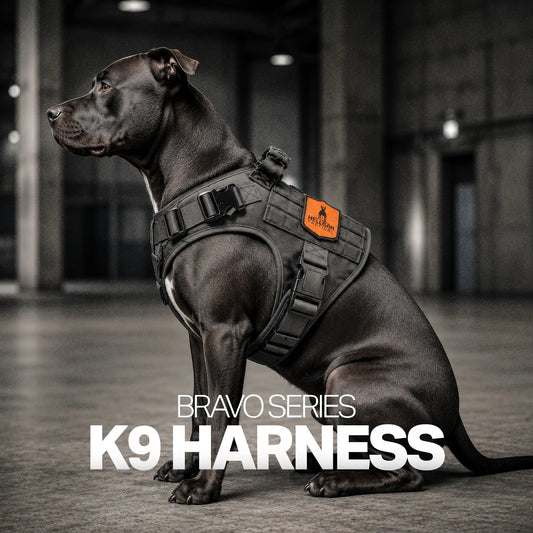
Lightweight, consumer-grade step-in harnesses are built for comfort and convenience, not for standing up to a persistent chewer. Hellgar Tactical harnesses are built around the tactical/military-grade standard instead: 1000D+ nylon, metal hardware, and a full body, snug-fitting design that minimizes the loose webbing a dog can grab onto in the first place. If your dog has already chewed through other harnesses, this is the build quality and design approach to look for.
Chew Proof Options for Small Dogs
Small dogs can be just as destructive as large ones, sometimes more so out of anxiety or teething. The same principles apply, heavy nylon, metal hardware, minimal loose webbing, but sizing matters even more here. A harness sized correctly for a small dog keeps material snug against the body with less slack to grab onto, while an oversized harness gives a small chewer easy access to loose straps.
Sizing a Chew-Resistant Harness Correctly
A harness that fits loosely gives a dog more material to grab and chew, and it also compromises whatever escape-resistance the design offers. To size correctly:
- Measure your dog's chest girth (not just weight) and match it to the brand's specific size chart.
- Tighten every strap until you can fit two fingers, not a full hand, underneath.
- Check for slack after a few minutes of normal movement, since straps can shift.
- Recheck periodically, especially with growing or seasonally shedding dogs.